
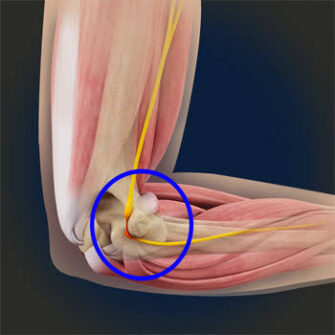
Nerve entrapment syndrome (also called a “pinched nerve” or “compressed nerve”) happens when a nerve is squeezed, pinched or stretched. This pressure interferes with the nerve’s ability to send proper signals, causing symptoms like numbness or tingling (like the body part has “fallen asleep”); burning pain; sharp, shooting pain; and muscle weakness.
If you’ve developed some of these symptoms in your hands, arms, or legs after years of physical work, you may be dealing with nerve entrapment syndrome. You likely also have a legitimate workers compensation claim, and we can connect help you with your case via our state wide network of experienced lawyers. Contact us any time for a FREE case review.
There are various types of nerve entrapment syndrome, and they vary based on the nerve affected and where the nerve is located. Some common ones include:
- Sciatica is the compression of the sciatic nerve or nerve roots in the lower back or glutes.
- Tarsal Tunnel Syndrome is the compression of the tibial nerve in the ankle leading to feet and/or heel pain.
- Thoracic Outlet Syndrome occurs when nerves or blood vessels are compressed between the collarbone and the first rib.
- Cubital Tunnel Syndrome is the compression of the ulnar nerve at the elbow and causes funny bone pain and numbness in the fingers.
- Carpal Tunnel Syndrome is the compression of the median nerve in the wrist and causes finger numbness and grip weakness.
These of course are not the only kind of nerve entrapment problems. And in helping injured workers since 1997, we have seen injuries with nerve entrapment to pretty much every body part.
Developing Nerve Entrapment on the Job
Nerve entrapment is frequently a part of a work-related injury. It typically develops slowly over months or years, and many workers don’t always make the connection between their work activities and nerve entrapment. Here are some of the causes:
Repetitive movements. Assembly line workers, meatpackers, cashiers, and machine operators perform the same motions thousands of times a day, placing constant stress on the same nerves.
Vibrating tools. Construction workers and mechanics who regularly use power tools, jackhammers, or heavy machinery are vulnerable to nerve compression.
Sustained gripping or pinching. Jobs requiring workers to grip tools tightly for long periods put ongoing pressure on nerves.
Awkward or prolonged postures. Bending body parts frequently or holding a position for extended periods can gradually compress a nerve.
Treating Nerve Entrapment
Treatment depends on how severe the compression is. Mild to moderate cases usually begin with splinting or bracing the affected joint, especially at night. Steroid injections or anti-inflammatory medication are common, as is physical therapy or occupational therapy. In severe cases, or if conservative treatment doesn’t work well enough, surgery may be needed.
With conservative care, activity modification and work restrictions may be necessary at work. With surgery, recovery can take weeks or months, requiring time off of work and ongoing rehab.
Workers Compensation Claims For Nerve Entrapment
Nerve entrapment cases are serious injuries. You are generally entitled to two things under the Illinois Workers’ Compensation Act:
- 100% of your medical bills paid for. You do not need health insurance and should pay nothing out of pocket.
- Payment for your time off work. This is called TTD which is 2/3 of your average weekly wage, tax free.
While those benefits are mandatory, a settlement is not, but you can get one by formally filing your case with the Illinois Workers’ Compensation Commission. This is where an attorney comes in. What your case is worth will depend on a variety of factors including your wages, the treatment you get and your recovery.
Even when it seems like the insurance company is doing everything right, they are looking for ways to end or minimize your benefits. They do this through things like:
- Nurse case managers who interfere with your care
- Independent medical exams (IME) with hired gun doctors
- Recorded statements which you do not have to give
- Trying to access medical records they have no right to possess
- Surveillance
Hiring an Illinois workers compensation attorney who has deep experience in nerve entrapment cases is critical. You need to be prepared for these insurance company tactics and prevent them from happening when possible.
A skilled Illinois workers’ compensation attorney will use evidence to establish the link between your injury and your work. Insurance companies often argue that nerve entrapment is a pre-existing condition unrelated to the job. The attorney will also help ensure that you’re getting the right medical care and that you’re being seen by qualified specialists.
The very first step, though, is to reach out to us. Call us at 312-345-5578. We have helped tens of thousands of injured workers and would love to help you. We promise to give you the same guidance we would to a family member or friend.
